- Subject
- Microsoft 365 & SharePoint
- Filed
- Source
- silicon
- Loans
- 874
AI Research Surges Put Peer Review and Scientific Training Under Strain
AI is accelerating research output, raising questions about review capacity, result quality and how students learn critical thinking.

AI tools are making it easier to produce research, but the systems that check and interpret that work still depend heavily on people. That gap is becoming harder to ignore: submissions are rising sharply, while reviewers and editors have limited time to assess whether papers offer sound methods and useful insight.



The pressure is visible in mathematics. OpenAI has drawn criticism after saying AI systems solved more than 700 longstanding maths problems in a short period. A letter signed by 28 Fields Medal recipients argues that producing a solution is only a means to a deeper goal: conceptual understanding. Mathematicians who have examined some of the results have described their reasoning as opaque, making it difficult to judge what the systems have actually established.
Terence Tao, a Fields Medal winner, compared the results to “carcasses of raw meat” left on a communal table with the claim that the food problem has been solved. The image captures the distinction at issue: an answer can be produced without giving researchers a clear route to inspect, explain or build on it. OpenAI said it consulted members of the mathematics community before announcing its latest three results, including one in computer science. Consultation, however, does not remove the need for independent scrutiny of the work.

Submission growth is testing review capacity
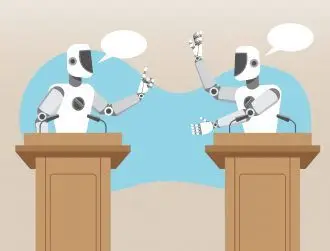
These concerns reach beyond mathematics. Journals and research conferences are handling more submissions, while peer review and editing still rely largely on volunteer effort. The scale of the challenge is striking at the International Conference on Learning Representations, a major AI meeting: it received 60,000 submissions this year, compared with 490 in 2017. One researcher responding to the figures said AI was “breaking traditional academic peer review.”
The growth predates today’s generative AI tools. In a 2024 paper called “The strain on scientific publishing”, Mark A Hanson of the University of Exeter and colleagues described exponential growth in the number of available academic papers. The number published in 2022 was about 47pc higher than in 2016, even as the population of practising scientists changed little. Longstanding pressure to publish more work, often summed up as “publish or perish”, is part of that increase. Generative AI is now accelerating a trend that was already under way.

The practical question is whether review systems can keep pace without weakening their assessment of research quality. A larger volume of submissions means more work for reviewers, and AI-assisted drafting or analysis can make it faster to produce material that still requires careful human checking. When reviewers have less time per paper, it can become harder to identify unclear reasoning, unsupported claims or errors.

AI review could help, but may add to the load
Some conferences are testing AI as a way to manage the volume. NeurIPS, which focuses on AI and machine learning, introduced a voluntary AI-assisted review for conference abstracts this year. Scientists later assessed the reviews for quality and usefulness. The trial points to a possible role for AI in supporting parts of the process, but researchers have also warned that automated review could compound existing problems.

For research teams and conference organisers, the distinction between assistance and authority matters. A system may help produce comments or sort material, but its output still needs evaluation. If the review itself is unclear or wrong, it adds another layer for people to check. The trial’s value will depend on what the evaluations show about review quality and whether the assistance reduces pressure without creating more work downstream.
Research skills take more than fast answers
There is also a change in who can produce academic-looking work. Anecdotal accounts suggest that people outside professional research are using AI to create papers and science books. That sits alongside citizen science, where members of the public make useful contributions in areas such as biodiversity monitoring and astronomy. The key difference is that research depends on more than access to tools: training, sustained investigation, critical judgement and input from knowledgeable colleagues all shape how questions are asked and results are assessed.
AI can lower barriers to producing text and carrying out some research tasks. But a polished paper or book does not, by itself, show that the underlying claims have been checked. The researcher whose work informs this discussion says it took 13 years after completing a PhD to write a first book; with AI, comparable production can appear to take weeks. Faster drafting shifts the work towards verification and interpretation. Humans still need to decide whether the content makes sense and whether the evidence supports it.
That shift raises a training problem. A student project that would normally take several months may now be close to automatable through carefully chosen prompts to an AI agent. If students mainly direct the system, educators need to ask what knowledge and judgement they gain from the process. Students must learn not only to generate answers, but also to frame useful questions and recognise when an answer fails.
The same tension applies to experienced researchers. AI may make projects possible when a team lacks the time or resources to pursue them unaided. Yet if researchers supply the initial ideas while a system does much of the reasoning, it becomes harder to say which intellectual skills the work is developing. Over time, reduced practice in developing research questions could also weaken people’s ability to critique AI-generated conclusions.
Isaac Asimov explored a related problem in his short story Profession, which imagines education delivered through direct transfers of knowledge. Its premise raises a useful question for research today: when information or results become easy to obtain, what forms of learning remain necessary for progress?
Scientific publishing may need new ways to share research as AI changes how quickly work can be produced. For now, the immediate test is whether review processes can preserve human scrutiny at rising volumes—and whether researchers in training still get the experience needed to judge the systems they use.