- Subject
- Microsoft 365 & SharePoint
- Filed
- Source
- Colin Ryan
- Loans
- 842
Agile Robots Raises $500m Series F to Expand Production and US Reach
Munich-based Agile Robots secured $500m at an $8.5bn valuation, with plans to expand production capacity and enter key markets including the US.
Agile Robots is putting a $500m funding round toward a practical test of its industrial robotics business: whether it can build more machines and expand into markets such as the US while developing additional applications. The Munich-based company says the Series F round values it at $8.5bn, making it one of Europe’s most valuable robotics start-ups.
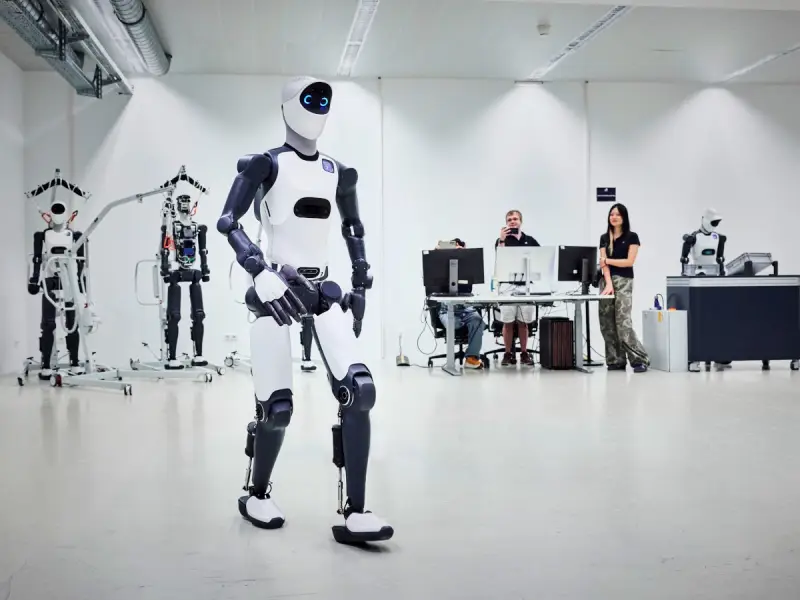
The scale of the raise reflects investor interest in “physical AI”: systems that combine artificial intelligence with machines operating in the physical world. For industrial customers, the measure will be how well those systems handle production work that depends on dexterity and judgement, and whether they can be introduced into existing operations. Agile describes that as its focus, with robots and software designed for industrial tasks.

Funding aimed at production and expansion
Agile plans to use the new capital to increase production capacity, support expansion into key markets including the US, and speed development of robotics applications. The company says it will continue building out production capacity in Germany as well. Earlier in 2026, it opened a production site in Fürstenfeldbruck, near Munich.

That combination of manufacturing investment and market expansion gives the funding round a clear operational focus. A robotics company needs to develop its machines, produce them at a scale that can serve customers, and support their use in working environments. Agile has identified capacity and geographic reach as priorities, but it has not provided specific production targets, a timetable for US expansion or details of the applications it intends to accelerate.

For industrial teams assessing robotics suppliers, the next useful indicators will be concrete: which tasks the systems can perform, how they fit into customer operations, and how the company’s manufacturing footprint develops. Agile’s stated plans point to growth in supply and reach; the company has not set out particular deployment milestones in the information available.

Robots, arms and integrated AI
Agile develops humanoid and mobile robots, robotic arms and hands, along with the software and AI models integrated into those machines. Its customers work in automotive, consumer electronics, healthcare and service industries. The company says its technology is intended to automate tasks that have traditionally depended on human dexterity and judgement.

That product range spans different kinds of equipment and work. Mobile robots can move through facilities, while robotic arms and hands perform physical tasks; humanoid machines add another form factor. The software and models are part of the system Agile sells, rather than a separate product category in the description it has provided. For buyers, the relevant question is how each machine and its control software match a specific task and operating environment.

Agile’s description of its ambition is to have intelligent robots work alongside people in factories and warehouses. CEO and co-founder Dr Zhaopeng Chen said physical AI will change how things are built, moved and made, and said the company aims to lead that shift. Those comments set out the company’s goal; the funding and planned capacity expansion are the steps it has identified to pursue it.

Investors and company background
Japan’s SoftBank Group led the Series F round, with Nvidia, Hitachi Group and T Capital also participating. The financing brings Agile’s total invested capital to $2bn. SoftBank Investment Advisers managing partner Dennis Chang said the firm believes physical AI will transform industries, and pointed to Agile’s robotics expertise and ability to operate at industrial scale.
Chen and Peter Meusel founded Agile in 2018 as a spin-out from the German Aerospace Center. Chen earned his PhD in mechatronics, robotics and automation engineering there. The founders had earlier been part of the team that started Wessling Robotics, which Agile acquired in 2023.
The company reports that it has filed more than 650 patents and employs more than 2,000 research and development experts. Those figures indicate the breadth of its technical effort, though they do not specify how many patents have been granted or how the research team is distributed across its products and sites.
What to watch next
Agile’s funding gives it room to pursue manufacturing growth and expansion while developing new uses for its robotics systems. The company has named Germany and the US as parts of that plan, but has not supplied dates, capacity figures or a market-by-market rollout schedule. Its newly opened site near Munich provides one concrete step in its production build-out.
For customers considering industrial automation, the practical test will be whether Agile can translate its broad product range and research capacity into systems that meet specific operational needs. The next signs to watch are production growth, customer deployments and clearer detail on the applications the company says it plans to develop.