- Subject
- Excel & Power BI
- Filed
- Source
- Laura Varley
- Loans
- 601
Exmoor Pharma CEO Lucy Foley on Scaling Cell and Gene Therapy Manufacturing
Lucy Foley says wider access to cell and gene therapies depends on scaling production, automation and infrastructure while keeping quality high.
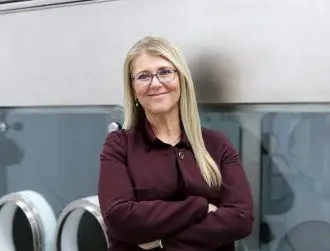
Making a cell or gene therapy available to more patients takes far more than developing a treatment. Exmoor Pharma CEO Lucy Foley’s experience points to the work around production—capacity, storage, distribution and cost—as a central constraint on turning scientific advances into routine care.
Foley’s career has followed that link between science and the systems needed to deliver it. At 13, she worked in a local pharmacy. The pharmacist used quiet periods to explain how medicines worked and how they were dispensed. Foley later studied biochemical engineering at UCL, combining her interest in biology with engineering.

“Nobody in my family worked in that world, so it showed me there were plenty of careers around medicine that didn’t involve becoming a doctor,” she said. The early experience helped her see that building and delivering medicines depends on expertise across several fields.

Manufacturing is one link in the chain
Before joining Exmoor Pharma, Foley worked at the UK’s CPI, where she helped establish the National Biologics Manufacturing Centre. She later led development of the RNA Centre of Excellence as part of the UK’s Covid-19 response. The work brought together manufacturing capability under pressure, with long days and frequent calls from people asking whether the UK could make RNA vaccines.

Foley described the effort as fast-moving and, at times, frightening. She also saw it as a chance to build infrastructure that could make the country more resilient in future. That experience sharpened her view of what it takes to get a medicine to a patient.

Vaccine production, she explained, was only one part of the task. Teams also needed vial-filling capacity, storage for thousands of RNA vaccine vials at minus 70 degrees Celsius, a distribution plan and suitable vaccination centres. Each dependency affects whether a product can move from manufacturing into use.
For pharmaceutical operations teams, the point is practical: production capacity alone doesn’t establish delivery capacity. Storage conditions, packaging and filling, transport, and points of care all need to work together. A shortfall at any one stage can limit how many patients a treatment reaches, even when the medicine itself can be manufactured.

One treatment changes the economics
Cell and gene therapies can involve taking a patient’s own cells, modifying them and returning them to that same person. Foley says the aim may be a more targeted treatment, or potentially a cure. In some cases, the hope is that one treatment will keep a patient disease-free for the rest of their life.
That possibility challenges payment models built around repeated treatment. Foley said the question of how to fund a one-off therapy with a lifetime of benefit will shape how medicines are developed, purchased and sold, particularly in the UK. The manufacturing challenge is also substantial: some processes can currently treat hundreds of patients, but the industry needs to reach thousands.
Increasing throughput means making more doses while controlling costs and maintaining quality. Foley argues that the industry needs to industrialise production, using automation to support higher volumes. She also sees artificial intelligence and machine learning as underused tools that could change how medicines are manufactured.
That shift has to account for the consequences of mistakes. As Foley put it, the industry is risk-averse “rightly so, because we’re giving medicines to people.” Automation and data-driven methods therefore need to fit processes where quality matters at every stage. Her comments point to a need for manufacturing approaches that can grow while preserving the controls patients depend on.
Scale is tied to patient access
Foley’s priority is widening access to critical medicines. Her measure of progress is not simply whether a therapy can be made, but whether production can serve the markets where patients need it. She frames the task as producing higher volumes at a lower cost of goods while keeping quality high, with processes scaled up or expanded across production capacity.
That also puts infrastructure planning at the centre of therapeutic development. The experience of building biologics and RNA manufacturing capability showed Foley how much work sits beyond the core process. For cell and gene therapies, the same broader view applies: manufacturers need a route from specialised production to repeatable operations that can serve more people.
Foley sees younger people entering science and technology as a source of ideas for this next stage, including ways to apply AI and machine learning. The concrete test for the sector will be whether those tools and production changes help move from treating hundreds of patients to treating thousands, without sacrificing quality. For teams developing these therapies, manufacturing scale and the systems around it will shape whether scientific promise becomes accessible care.


