- Subject
- Microsoft 365 & SharePoint
- Filed
- Source
- Laura Varley
- Loans
- 948
InnaLabs Gyroscope Helps ESA’s Hera Spacecraft Image Dimorphos
InnaLabs’ Arietis-NS gyroscope helped Hera steady its aim for close-up images of Dimorphos, with the same technology planned for the Ramses mission.
Hera’s close-up views of the asteroid Dimorphos depended on more than its camera. A gyroscope system built by Dublin-based InnaLabs helped the European Space Agency spacecraft keep its instruments pointed where they needed to be, putting the company’s hardware to work on a mission nearly 200 million kilometres from Earth.

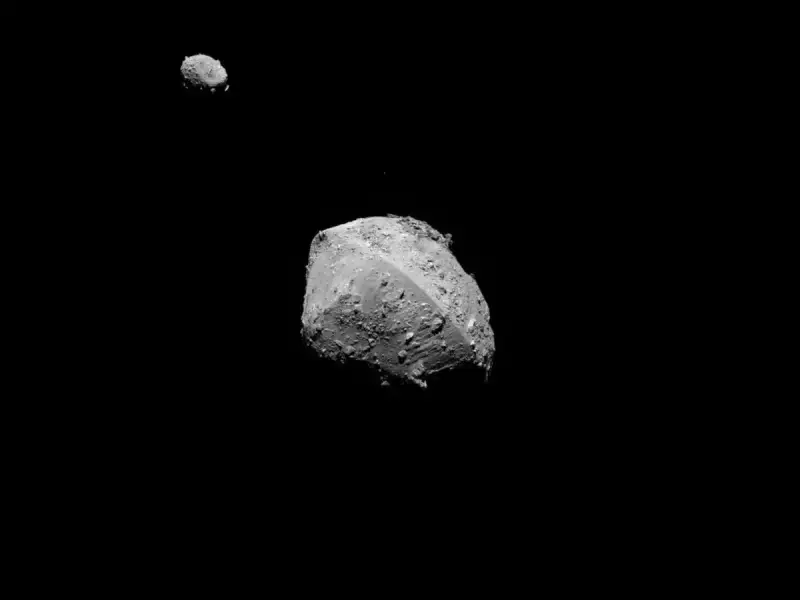
The system aboard Hera is Arietis-NS, an InnaLabs gyroscope designed to support the spacecraft’s orientation and pointing. That role matters when a camera has to capture a small, distant target: the spacecraft must hold its aim long enough to gather useful images. The same equipment also supported Hera shortly after its launch, when the spacecraft steadied itself and pointed its solar panels towards the sun.
From impact test to close-up observation
Dimorphos became a focus for planetary science after NASA’s Double Asteroid Redirection Test (DART) struck it in 2022 and altered its orbit. The test examined whether an asteroid’s path could be changed by deliberately colliding with it. Dimorphos is not considered a threat to Earth.
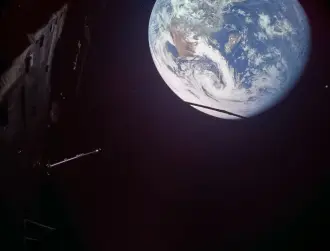
Hera launched on 7 October 2024 to study the consequences of that impact. Its Asteroid Framing Camera has captured close-up images, and early views have shown Dimorphos casting a shadow across the larger asteroid Didymos. The pictures give scientists observations of the two bodies and the impact site after DART’s intervention.
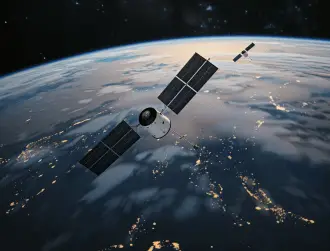
For mission teams, reliable pointing is part of the chain between reaching a target and collecting data that can be used. A camera can only record the intended scene if the spacecraft maintains the right orientation. Arietis-NS contributes to that task by helping Hera stabilise and aim. The available details don’t specify the gyroscope’s measurement accuracy, operating limits or the camera’s image resolution, so those performance figures can’t be assessed from the mission update.

Irish engineering on a long-duration mission
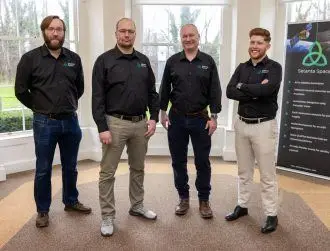
InnaLabs designed and built the gyroscope system in Blanchardstown, Dublin. Chief executive John O’Leary said the company had followed Hera from early discussions with its mission partners through launch and the spacecraft’s journey to the asteroids. He described seeing equipment made by the Dublin team support scientists studying an object at that distance as a satisfying milestone.
The European Space Agency worked with InnaLabs during the project’s design and testing stages. Enterprise Ireland provided financial support. Those details point to a development process that began well before the spacecraft launched: flight hardware needs to be designed, tested and integrated into a mission before it can contribute to operations in space. The information available doesn’t specify the test programme, contract value or the gyroscope’s exact contribution to each image.
For InnaLabs, Hera also serves as a demonstration of its space hardware in operation. The gyroscope’s role is specific: helping the spacecraft maintain orientation so it can perform tasks such as solar-panel pointing and camera observations. It does not take the images itself; the Asteroid Framing Camera does that work.
Ramses is the next planned mission
InnaLabs has also delivered Arietis-NS flight units for Ramses, a planned joint European and Japanese mission scheduled to launch in spring 2028. Ramses is intended to study the asteroid Apophis during its close flyby of Earth on 13 April 2029. That mission would put the company’s technology into another asteroid-observation programme, though the dates given are plans rather than completed milestones.
The Hera result gives teams a concrete example of how spacecraft orientation hardware supports imaging: the gyroscope helps keep the vehicle steady and the instruments directed at their target, while the camera gathers the observations. For the Ramses schedule, the next points to watch are the planned spring 2028 launch and whether the mission reaches Apophis in time for its 13 April 2029 flyby. For now, Hera’s Dimorphos images mark the clearest reported evidence of InnaLabs hardware contributing to this mission’s asteroid observations.