- Subject
- Windows & PowerShell
- Filed
- Source
- silicon
- Loans
- 672
Accenture Ireland’s Anne-Margaret Saunders: Resilience Means Preparing for Change
Anne-Margaret Saunders says resilience depends on leadership, adaptable operations and skilled teams as AI and other disruptions reshape work.

For organisations facing repeated disruption, resilience can’t mean waiting for a crisis to pass and then restoring the old way of working. Anne-Margaret Saunders, an AI adoption lead for Accenture in Ireland, argues that businesses need to adapt through change and emerge better prepared for what comes next. She describes that as “bouncing forward”.
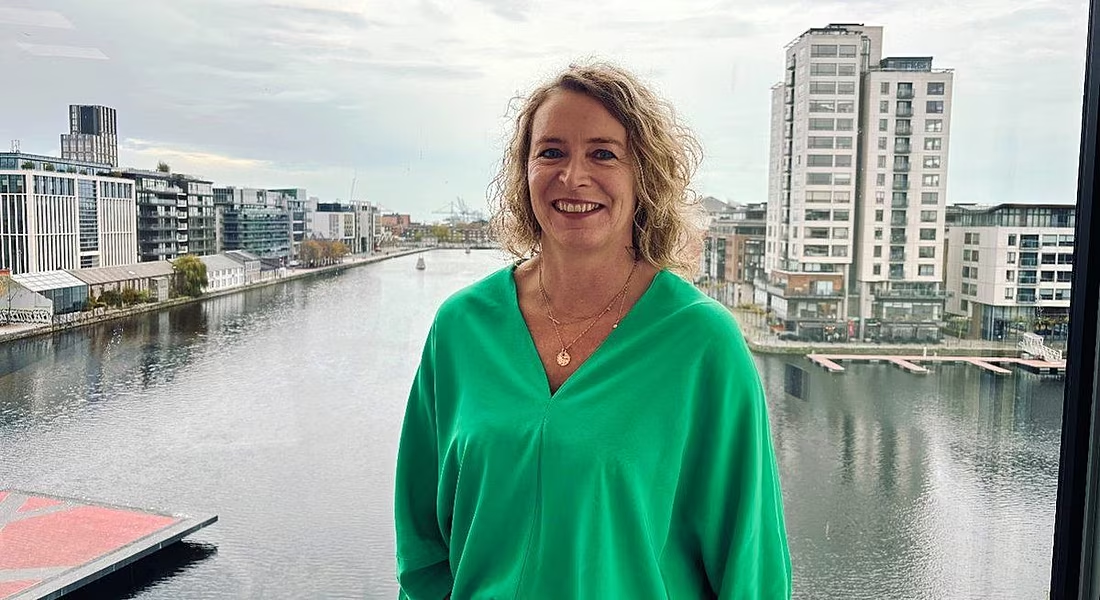
In an unpredictable environment shaped by rapid technological change, Saunders sees little reason to assume there will be a stable “normal” to return to. That shift changes resilience from a recovery plan into an organisational capability: leaders need to prepare people, technology and operations to adjust together.
Resilience has to be shared across the organisation
Saunders puts responsibility for resilience across the workforce, while assigning leaders a central role. They set direction and shape the conditions that let teams respond when circumstances change. Human resources can contribute, but resilience can’t belong to a single department or executive. Leaders throughout the organisation need to build it into how people work, how technology is used and how operations are run.

Those parts are interdependent. Buying or deploying technology, by itself, won’t deliver the intended results if processes don’t support it or employees lack the skills to use it well. Saunders says organisations get stronger outcomes when they consider the tools, the working practices around them and the people who use them as a connected set.

That applies to learning, too. Employees need to stay curious and open to developing new skills, but organisations must give them time, support and psychological safety to do so. Telling staff to be resilient while leaving them without the conditions to adapt shifts the burden onto individuals. Saunders argues that resilience should be built into the organisation rather than treated as another personal obligation.
Her own career illustrates the effect of those conditions. Earlier in her career, she left the workforce because she couldn’t get the flexibility she needed. When she joined Accenture 10 years later, flexibility, coaching and mentoring were part of her return. Saunders says this support helped her rebuild confidence, refresh her skills and adjust to a workplace that had changed significantly. In her account, the difference lay in the environment around her, not in a change to her willingness to contribute.

Prepare for risks that arrive together
External pressures include tariffs, geopolitical tensions, supply chain disruption and the pace of AI. Saunders says these factors can collide and compound, which makes it difficult to manage them as separate, one-off events. Organisations may have little control over the disruptions themselves. Their preparation and response are areas where they can act.

Internally, resilience depends on several practical capabilities: how quickly and effectively leaders make decisions; whether operations and processes can flex; whether technology and data are secure; and whether employees have the skills and confidence to respond. A gap in one area can weaken the rest. Strong technology won’t compensate for rigid processes, capable operations can be held back by skills gaps, and talented employees may struggle if they lack authority to make decisions.
For IT and business leaders, that means assessing how changes affect the whole operating model. A technology rollout may require updated processes and training as well as technical work. Resilience planning also needs to account for the links between data, security, people and day-to-day operations, rather than treating each as an independent concern.
Make learning and trust part of the work
Workforce resilience, in Saunders’ view, starts with the conditions that help people keep doing good work while circumstances shift. Trust and psychological safety matter: employees should feel able to raise concerns, challenge assumptions, admit uncertainty and ask for help. Saunders highlights that openness as especially relevant as organisations introduce AI.
Leaders can’t know exactly which capabilities employees will need in five or 10 years. They can help people build the confidence and ability to continue learning as requirements change. Saunders also points to diversity of experience: teams benefit when people bring different skills, perspectives and ways of approaching problems.
That effort needs to be sustainable. A workforce that is permanently stretched may be committed, but exhaustion, missing skills and reluctance to seek support all weaken its ability to adapt. Leaders therefore need to consider whether performance expectations leave people able to learn and respond over time.
AI raises the next set of resilience questions
As organisations move from experimenting with generative AI (GenAI) and agentic AI to embedding them in work, Saunders says they need to address responsible use, cybersecurity, data, trust and governance. They also need to help employees build the skills to adapt to changed workflows. The challenge extends beyond workforce planning: technology decisions can create new demands for operational processes and oversight.
Skills are changing quickly, and employee expectations are changing too. Organisations need to attract and develop the capabilities they require while protecting trust, wellbeing and sustainable performance. Investing heavily in technology without strengthening those surrounding capabilities leaves resilience exposed.
Saunders’ practical message is to build readiness before disruption arrives. Leaders can review whether decision-making is timely, processes can adapt, technology and data are protected, and employees have the support and authority to act. With AI becoming more embedded in work, those connected capabilities will help determine whether organisations can simply absorb change or use it to improve how they operate.