- Subject
- Microsoft 365 & SharePoint
- Filed
- Source
- Laura Varley
- Loans
- 552
Trinity Team Secures €10.5m Grant to Study Brain and Immune Memory
A four-person team led by Trinity’s Tomás Ryan will study how the brain stores memories of illness and may use them to shape future immune responses.
A €10.5m European Research Council Synergy Grant will fund a four-person international team investigating how the brain records illness and whether those memories influence later immune responses. Led by Prof Tomás Ryan of Trinity College Dublin, the project, called “Immune Memory,” brings neuroscience and neuroimmunology expertise together to examine a two-way relationship between the brain and the immune system.
The research centres on memories formed during immune experiences such as infection and inflammation. The team will explore how the brain stores those experiences and uses them to anticipate future challenges. That question shifts attention from the well-established effect of immune activity on the brain to a less understood possibility: that remembered immune experiences can also affect how the body responds.

Four researchers, two areas of expertise
Ryan, who is based in Trinity’s School of Biochemistry and Immunology and the Trinity College Institute of Neuroscience, is the project’s coordinating principal investigator. His collaborators are Prof Staci Bilbo of Duke University in the United States, Prof Claudia Buss of Charité-Universitätsmedizin Berlin in Germany, and Prof Markus Werkle-Bergner of the Max Planck Institute for Human Development and the University of Bremen, also in Germany.
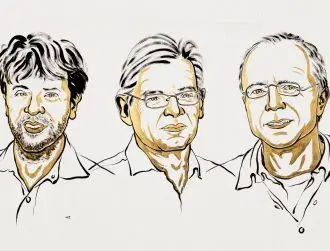
Ryan and Werkle-Bergner specialise in the neuroscience of memory. Bilbo and Buss study neuroimmunology, with particular expertise in inflammation related to pregnancy. The collaboration pairs research into how memories are formed with work on how immune activity and inflammation interact with the nervous system.
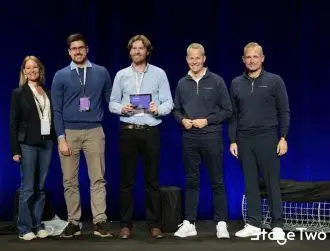
The ERC Synergy Grant programme backs projects that are often too ambitious for one researcher to pursue alone. Eligible teams typically have between two and four researchers, and can bring together people from different countries, institutions, fields and career stages. Immune Memory has the maximum team size described for the scheme: four principal researchers working across institutions in Ireland, the United States and Germany.
What “immune memory” means for the project
Ryan describes the brain and immune system as being in constant communication, rather than functioning as separate systems. The project will investigate how the brain retains information about earlier immune events, stores it as what researchers call “engrams,” and may draw on it when the body encounters a later challenge.
An engram is a physical memory trace in the brain. In this project, the term points to the central research problem: identifying how an experience involving illness or inflammation is represented in memory, and whether that stored representation can affect immune function later. The team’s stated aim is to investigate the mechanisms connecting these processes. The announcement does not specify particular experiments, methods, study participants or a project timetable.
Research already shows that immune activity can influence the brain. The less understood direction is how the brain remembers immune experiences and then uses that information to shape the body’s response. Establishing that connection would require researchers to trace the links between memory processes and immune function, rather than treating sickness-related experiences as only a short-term effect on the brain.
Why early development is part of the question
Bilbo and Buss bring experience in inflammation, especially in relation to pregnancy, giving the team expertise relevant to immune and brain processes during early development. The researchers say they hope their work will help clarify how these connections relate to lifelong health, susceptibility to disease and the influence of early development. Those are research goals; the grant announcement does not report findings or claim that the project has already established effects on health.
The possible value lies in understanding whether the brain’s record of past immune events has a role in later bodily responses. If the researchers can identify the mechanisms involved, their work could add detail to how scientists understand communication between brain and body across a person’s life. For now, the concrete next step is the investigation itself: mapping how illness-related experiences are stored and testing how those memories may relate to future immune challenges.