- Subject
- Windows & PowerShell
- Filed
- Source
- Matt Whitlock
- Loans
- 316
MSP Updates: ConnectWise AI Agents, Cisco Incentives and New Security Tools
ConnectWise brings AI investigation into PSA tickets as channel vendors expand AI, cloud, storage and security tools for MSPs.

For MSPs, this week’s changes point to two practical priorities: putting AI into repeatable service workflows and gaining more control over the systems customers are adopting. ConnectWise is moving endpoint investigation into PSA tickets, while distributors and vendors are building partner paths for AI and consumption based services. Security updates from Dell, Fortinet, Cato, Huntress, Microsoft, Delinea, ESET and Bitdefender add new controls and highlight gaps that service providers may need to address with customers.

AI enters service workflows and partner delivery
ConnectWise made its RMM, Voice, Teams and Email AI agents generally available. Its RMM agent diagnoses endpoint issues and prepares vetted fixes inside PSA tickets, where a technician can review them before approval. That places investigation and proposed remediation in the workflow technicians already use to manage service requests. The key operational detail is the approval step: the agent can stage a fix, but the technician remains in control of applying changes to a managed environment.
ConnectWise CEO Manny Rivelo described the aim as moving AI beyond answers and into work that advances service delivery. For MSPs, the value will depend on how well the agents fit existing ticket handling, how often their diagnoses and proposed fixes are useful, and how clearly technicians can review what they are being asked to approve.

TD SYNNEX is building a separate route for partners who want to take AI projects from discovery into deployment for small and midsize businesses. Its expanded Destination AI includes SMB focused planning and lab experiences, partner training intended to support repeatable deployments, and a StreamOne AI Skills Marketplace. Initial AI skills target sales, marketing, customer support, operations and knowledge management.
TD SYNNEX chief strategy and technology officer Sergio Farache said the focus should extend beyond productivity tasks such as improving emails and presentations to business processes. That gives partners a defined set of domains to explore with SMB customers. The practical question is whether a proposed AI deployment addresses a specific workflow need and can be tied to a measurable business result.

Ingram Micro is also trying to shorten the sales process for SMB technology. Its SMB Quick Buy service will let eligible U.S. partners configure, quote and order validated Cisco and Meraki SMB solutions within Xvantage. The stated scope is limited to eligible partners in the United States and to the validated solutions available through the service. MSPs can check whether their partner access includes Quick Buy and whether the catalog covers the configurations they commonly quote.
Partner programs and managed services expand
Cisco is adding ecosystem deal registration, higher adoption and growth incentives, partner access to Cisco IQ, and new Cloud Control capabilities for managed and professional services. The changes extend the Cisco 360 Partner Program and give different partner roles additional ways to participate, from advising customers through delivery and ongoing support. Cisco senior vice president of global partner sales Tim Coogan framed the updates as a way to reward partners as customer demand for AI grows.

For partner teams, the concrete next step is to review the program’s updated incentive and deal registration terms, then check which Cisco IQ and Cloud Control capabilities are available to them. The source does not specify incentive amounts or eligibility rules, so partners will need those details from their program materials before building them into forecasts or customer proposals.
Arrow is adding a managed lifecycle service for NetApp Keystone. The offering is designed to help channel partners provide consumption based storage alongside monitoring, optimization, cyber resilience and data protection services. This gives partners a broader service layer around storage consumption, with potential recurring work in operations and protection as well as the underlying capacity. Arrow general manager of global services Mike Martin said the service is intended to simplify delivery and support adoption.
These updates share a delivery theme: distributors and vendors are packaging capabilities that partners can bring into customer engagements without building every component themselves. MSPs still need to establish how service responsibilities, monitoring and customer support fit their own operating model.
Security tools address AI, identity and exposure
Dell is expanding its cyber recovery and security services across AI environments, identity and infrastructure. The additions include AI security and recovery services, PowerProtect recovery for Active Directory, Entra ID and Okta, identity MDR, and planned quantum ready storage capabilities. Dell vice president of cyber resilience Simon Jelley said organizations are managing more complexity across these areas. For administrators, the named identity platforms are the immediate scope to examine; the quantum ready storage capabilities are described as planned.
Fortinet’s cloud delivered FortiGuard Inline AI Security Service uses existing FortiGate deployments to inspect prompts, model responses, MCP traffic and agent activity. The service positions the firewall as an inline control point for AI use. Fortinet says FortiAIGate provides a foundation for customers to choose how they deploy and consume AI security based on cost, performance, privacy and sovereignty requirements. Teams evaluating it should map the inspection points to their AI traffic and existing FortiGate setup.
Cato AI Endpoint focuses on AI activity that can happen directly on a device. It discovers and governs browser based AI, desktop applications, local agents, MCP servers and skills, and is designed to operate alongside existing SSE, VPN and EDR tools. Cato chief product officer Ofir Agasi said the product aims to provide host level inspection across browsers, native applications and agents. That scope matters to organizations whose AI use extends beyond browser access, though deployment fit will depend on how endpoint controls interact with the tools already in place.
ESET introduced NeoCortex, a specialized model that powers LiveCortex inside ESET Protect. The system correlates telemetry, reconstructs incident context and estimates likely attack progression under human oversight. ESET chief technology officer Juraj Malcho said the company intends the technology to strengthen human expertise rather than replace it. For security operations teams, the described role is predictive analysis and context building, with people retaining oversight.
Bitdefender launched GravityZone Exposure Management, combining vulnerability discovery, external attack surface management, attack path analysis and dynamic hardening. The product is intended to help lean security teams prioritize and remediate exposures considered most likely to be exploited. Bitdefender says it learns normal activity for each user and adjusts hardening as behavior and threats change, including for AI agents. Teams assessing the service can compare those functions with their current processes for identifying exposed assets, excess permissions and remediation priorities.
Identity governance and remote management need attention
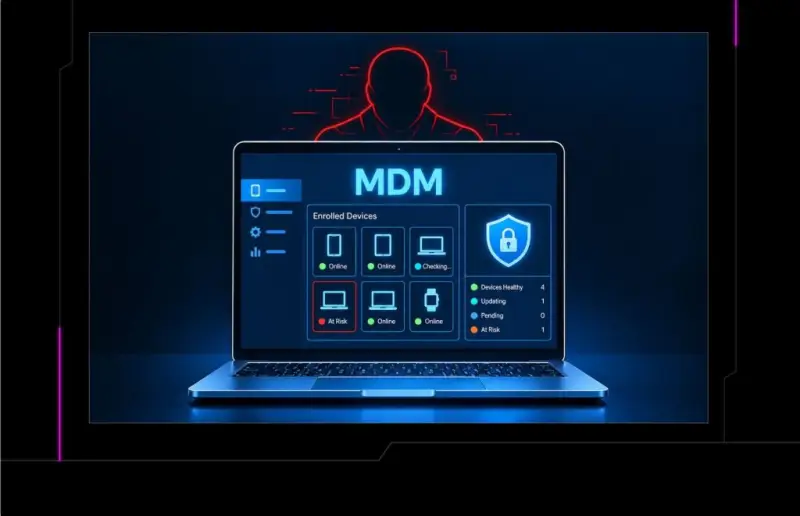
Huntress documented incidents in which attackers used business themed lures to enroll devices in attacker controlled Hexnode or Rippling MDM tenants. The reported activity did not rely on a product vulnerability. Once enrolled, a device could receive persistent privileged management, including the ability to reinstall ScreenConnect after an MSP had removed it.
Huntress recommends correlating unexpected MDM enrollment with management agents, RMM services and outbound relay connections. The finding makes device enrollment a useful part of an MSP’s incident review: removing an unwanted RMM tool may not be enough if another management channel can reinstall it. Service providers should include unfamiliar MDM tenants and agents in investigations of unexpected remote access activity.
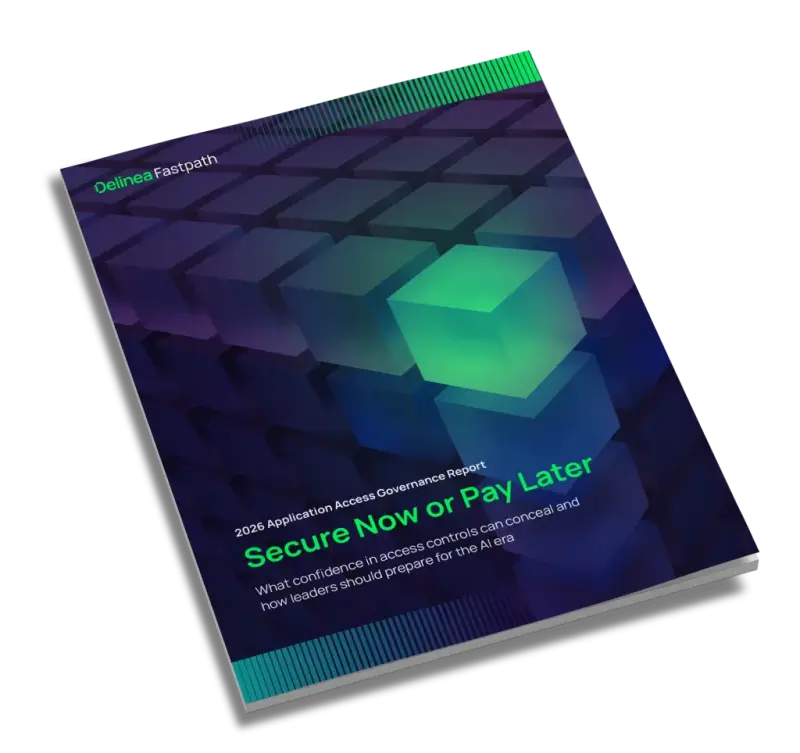
Delinea’s 2026 Application Access Governance Report highlights a gap between confidence and practice. While 95% of organizations said they were confident their application access controls would withstand an external audit, 51% reported the same or similar access findings recurring in consecutive years, or findings remaining open for three or more years. A further 52% said they do not continuously monitor and remediate excess access.
Those figures suggest that confidence alone may not show whether access is being reviewed and corrected consistently. MSPs supporting identity and application access can use recurring findings and unaddressed excess permissions as concrete areas to examine with customers, especially where service accounts, administrators or automated agents have broad access.
Network visibility and certificate protections
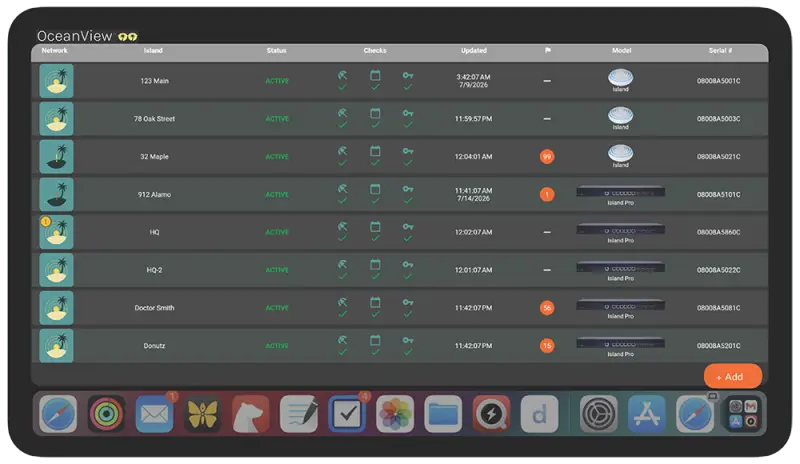
Island firmware Version 4.1 adds OceanView fleet monitoring and Cross Connect. The features give integrators and businesses with multiple locations centralized visibility into Island firewalls and more granular communication across segmented networks. Island chief revenue officer Tom Gallo said the monitoring is intended to help teams spot and resolve issues before customers are affected. Teams running distributed sites can assess whether the new fleet view and communication controls match their support needs.
Microsoft issued out of band protections after private keys associated with eight eMudhra G3B/G3C subordinate certificate authorities were compromised. The affected authorities include six TLS CAs and two code signing CAs. Microsoft said the incident involved eMudhra and did not involve a compromise of Microsoft systems.
On Oct. 20, Microsoft published an out of band Windows update that blocks the eight compromised CA keys through the Disallowed Certificate Trust List. Microsoft also pushed an emergency CRLSet update to Edge and WebView2 to block the affected TLS CA keys. Administrators should check that Windows devices and Edge or WebView2 environments receive the applicable protections and account for the affected certificates in their operations.
Across these updates, the work for MSPs is to connect new capabilities to existing service processes: review which partner features are available, establish human review for AI actions, and include identity, endpoint management and certificate protections in routine customer checks.


