- Subject
- Windows & PowerShell
- Filed
- Source
- Laura Varley
- Loans
- 627
AI Productivity Gains Raise Workload Creep Concerns for Employees
A global survey found widespread AI productivity gains, but half of employees who save time use it for new work. Leaders must decide where that capacity goes.
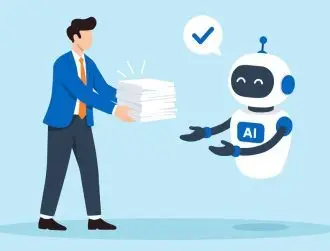
AI is helping employees finish tasks faster, but the time saved may be turning into more work. In a global survey, half of respondents who said AI saves them time reported using that capacity to take on new responsibilities or projects. The finding puts a practical question in front of employers: when AI shortens a task, does the benefit go to the employee, or does the expected workload expand?

The pattern is described as “workload creep”: productivity improves, while responsibilities grow as a side effect. That can happen without a formal change to a role. More available time may be absorbed by additional assignments, leaving the original workload intact and raising the amount employees are expected to deliver.


AI use is now common, and expectations are rising
The Inclusion Initiative at the London School of Economics and Political Science (LSE), working with consulting firm Protiviti, published the report Beyond the Technology: Who Really Captures AI’s Gains at Work. Its third annual survey gathered responses from 3,001 professionals around the world between March and May 2026.

Nearly three-quarters of participants said they use AI at work, up from 29% in 2024. That adoption sits alongside a marked concern about workplace expectations: 48% feared being judged negatively for not using AI enough. By comparison, 20% worried about criticism for using it. The gap suggests that, for many employees, keeping up with AI has become part of how they think their work is assessed.

Dr Grace Lordan, founding director of The Inclusion Initiative at LSE, said employees feel pressure to demonstrate that they are keeping pace with AI while also taking on more. She argued that leaders need to explain where the technology adds value and how teams should use the time it frees. Without that direction, she warned, efficiency gains can simply raise the expected baseline of output.

Faster work does not automatically mean better performance
Respondents reported several benefits. Some 82% said AI helps them complete tasks more quickly, 70% said it reduces mental effort, 63% said it automates manual tasks, and 62% said it improves work quality. These figures describe participants’ reported experience; they don’t establish that every tool or task produces the same result.

The report also found no consistent association between perceived job performance and AI adoption, training, access to AI within an organisation, or its integration into standardised workflows. In other words, broader use and workplace support did not, on their own, correspond consistently with employees feeling that their performance was higher.

Instead, the report linked higher performance with human characteristics: conscientiousness, resilience, confidence in solving problems, and willingness to learn. That finding matters for managers deciding what to measure. Counting AI use or tracking the number of tasks completed may show activity, but the survey does not identify either measure as a reliable stand-in for perceived performance.

Decide where the saved time goes
Matt Duncan, managing director at Protiviti, said organisations can miss much of AI’s potential if they simply fold the capacity it creates into existing workloads. He pointed to higher-value work, better quality, and more room for employees to solve problems and innovate as possible uses of that time. His central point is that the gain depends on how organisations direct the capacity, not only on how quickly a task is completed.

For managers, this makes workload planning part of AI adoption. Teams need clarity on whether saved time should support more assignments, improve existing work, or create space for problem-solving. If expectations rise without an explicit discussion of priorities, employees may experience efficiency as an expanding list of responsibilities rather than a reduction in effort.
The survey figures also give leaders a reason to make their expectations visible. With 48% concerned about being judged for insufficient AI use, employees may feel pushed to demonstrate adoption even when a task does not benefit from it. Clear guidance on where AI is useful, paired with a defined purpose for the time saved, can help connect tool use to outcomes that matter.
The results don’t show that AI adoption consistently improves perceived performance, nor do they establish that every employee experiences workload creep. They do show a tension between reported productivity gains and rising concerns about expectations. When organisations review their AI practices, they should look at both sides: what work the tools speed up and what new work employees are then expected to absorb.
AI can create room for higher-value contributions, but that outcome won’t follow from faster task completion alone. The practical test for leaders is whether they decide deliberately how the freed capacity will be used—and whether employees can see that decision reflected in their workload.