- Subject
- Microsoft 365 & SharePoint
- Filed
- Source
- [email protected]
- Loans
- 822
AI Adoption in Public Agencies Depends on Data Readiness and Governance
Google’s 2026 summit highlighted broad agent deployment but limited agency-wide adoption, putting data quality, access controls and oversight at the center of AI readiness.
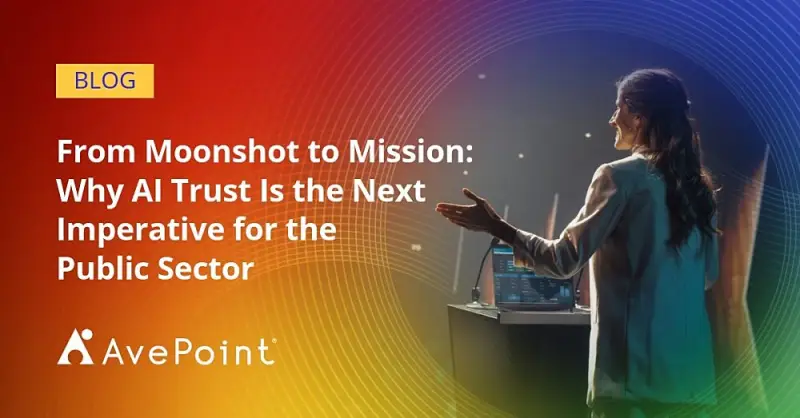
Public agencies are already putting AI agents to work, but broad deployment hasn’t yet translated into broad adoption. Research from Google, theCUBE and ECI Research found that 96.3% of agencies had deployed agents in some form, while only 9% had reached agency-wide adoption. Legacy data silos and complex integrations remain barriers. The gap points to a practical constraint: agencies need confidence in the information and permissions their AI systems will use before relying on them in daily work.

At the Google Public Sector Summit 2026, themed “Where Mission Meets Moonshot,” Google announced Gemini for government services, enterprise search for air-gapped environments and new agentic security capabilities through Wiz. These offerings reflect the push to connect AI with operational systems. Yet getting AI into workflows is only part of the task. Agencies also need to understand what information agents can reach, which rules govern their actions and how to respond when an outcome is unintended.
That makes data governance part of AI readiness from the start. Poorly managed information can affect what an agent finds and how it acts. Controls applied only after deployment may arrive too late to address inherited access or outdated content. For agencies, trust needs to be built into the data and permissions that AI uses, then maintained as agents take on more work.
Migration choices shape AI readiness
Moving collaboration and content into Google Workspace is often framed as a modernization project. With AI in the picture, migration also determines what information will be available to shape AI responses and actions. Google’s Gemini for government services is designed to connect Gemini with case management, ERP and collaboration systems without requiring agencies to migrate sensitive data first. That approach recognizes that useful AI context can span existing systems.
For organizations moving information into Google Workspace, the migration is a chance to decide what should carry forward. Long-running collaboration environments often contain duplicated files, outdated material and permissions that remain after employees or responsibilities change. Some content still has business value; some may no longer need to move.
These issues predate AI, but AI can make their effects more visible. Information that employees once had difficulty finding may become easier for an agent to surface and use. Migration planning should therefore consider the value and condition of the content, its access rules and the purpose it will serve in the new environment. Those decisions help shape the information environment in which AI operates.
Prepare the information before agents use it
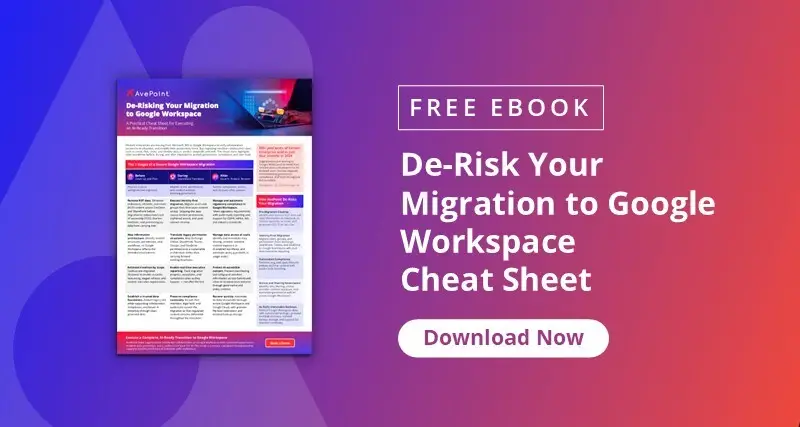
A migration plan focused only on what can be moved can carry forward years of accumulated clutter and access decisions. Before transferring content, agencies can identify information that remains useful, review permissions and address stale, duplicated or poorly governed material. That preparation helps establish a more dependable data foundation.
Data readiness matters because AI changes how people interact with stored information. A document buried in a repository may have been hard for an employee to locate; an agent can make that information easier to discover. Easier access can help users find useful context, while also bringing irrelevant or outdated material into view. Confidence in the AI model alone doesn’t resolve questions about the quality and permissions of the data it can use.
Govern across connected systems
Moving to Google Workspace doesn’t mean that every application, repository, workload or AI tool will end up in one environment. Gemini for government services is designed to connect with existing case management, ERP and collaboration systems, reflecting the reality that agencies work across multiple platforms.
That makes visibility across connections a central governance need. An agent may run in one place while accessing information or tools elsewhere. Agencies need to know what agents can reach and do across those systems, and apply policies to their interactions with data and other tools. Deloitte reports that only one in five companies has a mature governance model for autonomous AI agents.
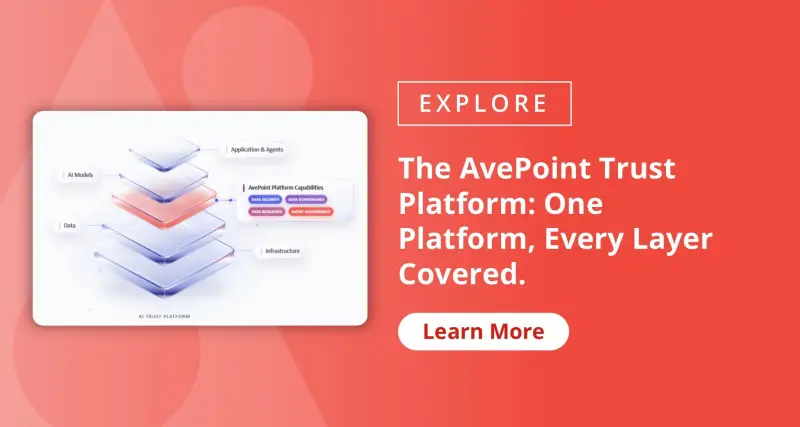
A cross-cloud approach to AI trust recognizes that information, models and AI providers may span different environments. Governance needs to account for where those systems operate and how they connect. Assuming that every workload will eventually sit in a single ecosystem leaves agencies with gaps in oversight as AI crosses platform boundaries.
Control access and prepare for unintended results
Data readiness is the beginning of AI trust, not the end. Once agents use inherited information, agencies need visibility into which agents are operating, what data they can access and which rules direct their actions. In a survey cited by AvePoint, 62% of organizations that reported the highest confidence in preventing unauthorized data access still experienced at least one AI-related unauthorized access incident in the past year. The finding underscores that confidence and effective control are different measures.
Agencies also need a response plan for unexpected agent behavior. They should be able to trace what happened, check whether applicable requirements were followed and restore systems when needed. AvePoint describes its approach as combining governed data foundations and least-privilege access with enforceable policies, audit-ready evidence and recoverability.
For IT teams, the practical work is continuous: review the information being migrated, check inherited access, map the systems agents can reach, and keep governance aligned with agent capabilities. Google’s summit theme captures the ambition of applying AI to public services. Whether agencies can rely on those capabilities in everyday workflows will depend on the less visible decisions around data quality, access and oversight.