- Subject
- Microsoft 365 & SharePoint
- Filed
- Source
- Matt Whitlock
- Loans
- 597
Microsoft 365 Outage, MSP Security Risks and Infrastructure Costs Lead This Week’s Channel News
A Microsoft 365 disruption tested service continuity as MSP security, AI recovery, patching and infrastructure costs stayed in focus.
A Microsoft 365 disruption that stretched into a second day put service continuity at the centre of MSP operations. At the same time, security researchers reported rogue ScreenConnect clients spreading across managed environments, N-able urged customers to patch N-central, and new research pointed to mounting infrastructure costs and gaps in security readiness.

Microsoft 365 disruption continued into Nov. 13
Microsoft reported service degradation beginning Nov. 12 across Exchange Online and other Microsoft 365 features. The impact reached Outlook access and mail delivery, Teams features that rely on Exchange Online, Microsoft 365 Copilot, administrative portals and parts of Microsoft Defender for Office 365.
Microsoft reported improved availability and shorter email queues on Nov. 13, but some users still experienced intermittent access and delayed mail. For IT teams, the spread across email, collaboration, administration and security workflows meant a service issue could affect several day-to-day processes at once. The Microsoft 365 service health page provides the current service updates.
Read more about the disruption and its effect on MSP continuity work.
ScreenConnect activity reached hundreds of endpoints
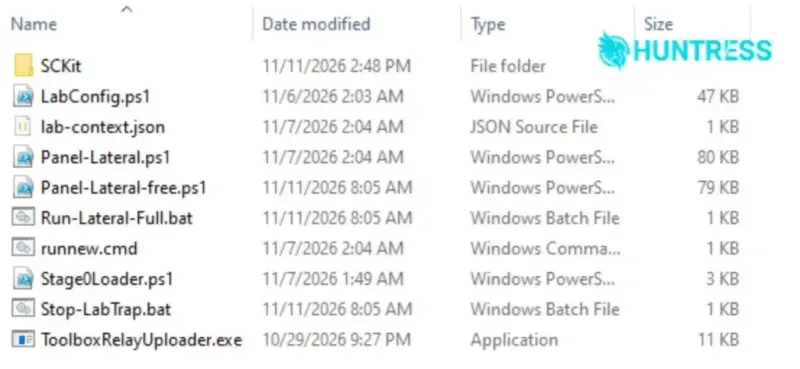
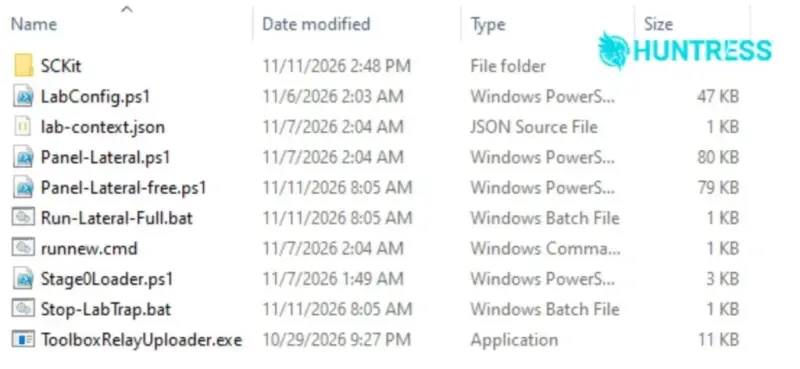
Huntress reported a worm-like operation using compromised, cloud-hosted ScreenConnect panels to deploy rogue remote access clients across MSP environments. The company observed attackers using ScreenConnect Run commands to install the clients on at least 288 endpoints at 48 organizations.
Huntress linked the activity to vulnerable versions of the third-party RMM+ extension. The extension could accept a blank access key when an administrator had not configured one. ConnectWise disabled five potentially related third-party extensions across more than 400 partner environments as a precaution.
The SCKit toolkit installs a second ScreenConnect client controlled by the attackers, establishes persistent access and attempts to intercept technician session cookies. MSPs using ScreenConnect should review the vendors’ security information and check their extension configuration and managed systems for signs of unauthorized clients.
Huntress’ SCKit findings detail the observed activity. In a separate finding, Huntress reported persistent webshells and cryptominers following an AhsayCBS compromise: AhsayCBS investigation details.
N-able asks N-central customers to install 2026.4 HF2
N-able is urging customers with on-premises N-central deployments to install version 2026.4 HF2 as soon as possible. The company says the hotfix addresses the highest-risk vulnerabilities disclosed that month and advises customers to keep N-central servers inaccessible from the internet until the upgrade is complete.
N-able has upgraded hosted N-central servers and returned them to service. Customers on both hosted and on-premises deployments also need to update their Agents and Probes. The company says it has addressed all identified vulnerabilities that could be exploited by an unauthenticated user. Other vulnerabilities require an authenticated N-central account, often with elevated privileges, or additional conditions; N-able plans to address those in a subsequent hotfix. Administrators can follow the N-central security update for the vendor’s guidance.
Recovery and automation vendors target AI agent workflows
Commvault is adding AgentRecover capabilities for enterprises using Amazon Bedrock AgentCore and Microsoft Foundry. The offering is designed to help teams audit agent activity, restore agents and recover affected data and systems. Commvault’s chief technology and AI officer, Pranay Ahlawat, said agent decisions can trigger changes across data, applications and infrastructure, making it important for organizations to see what an agent did and restore both the agent and affected resources.
Sherweb is opening cloud operations data to approved AI tools through a read-only Model Context Protocol (MCP) server. The connection covers cloud subscription, usage, pricing and billing data. Sherweb says MSPs can use the standardized interface with an AI assistant, an automation platform or a tool they have built themselves. The read-only design gives agents access to operational information without providing write access through this connection.
These releases address different parts of the same operational shift: agents may need access to business data to assist with work, while IT teams need ways to trace their actions and recover affected systems. The details announced by Commvault and Sherweb point to recovery and controlled data access as areas MSPs and enterprise teams should assess as they expand agent use.
Provider research highlights demand and readiness gaps
The Global Technology Industry Association (GTIA) found that 76% of surveyed North American service providers plan to add cybersecurity solutions in the next 12 months, up from 65% in 2025. AI-generated attacks were a leading concern for 51% of respondents. Yet only 42% said more than half of their customers had multifactor authentication on all critical systems, and 35% reported immutable, air-gapped backups. The figures suggest providers see room to grow security services while customer safeguards remain uneven.
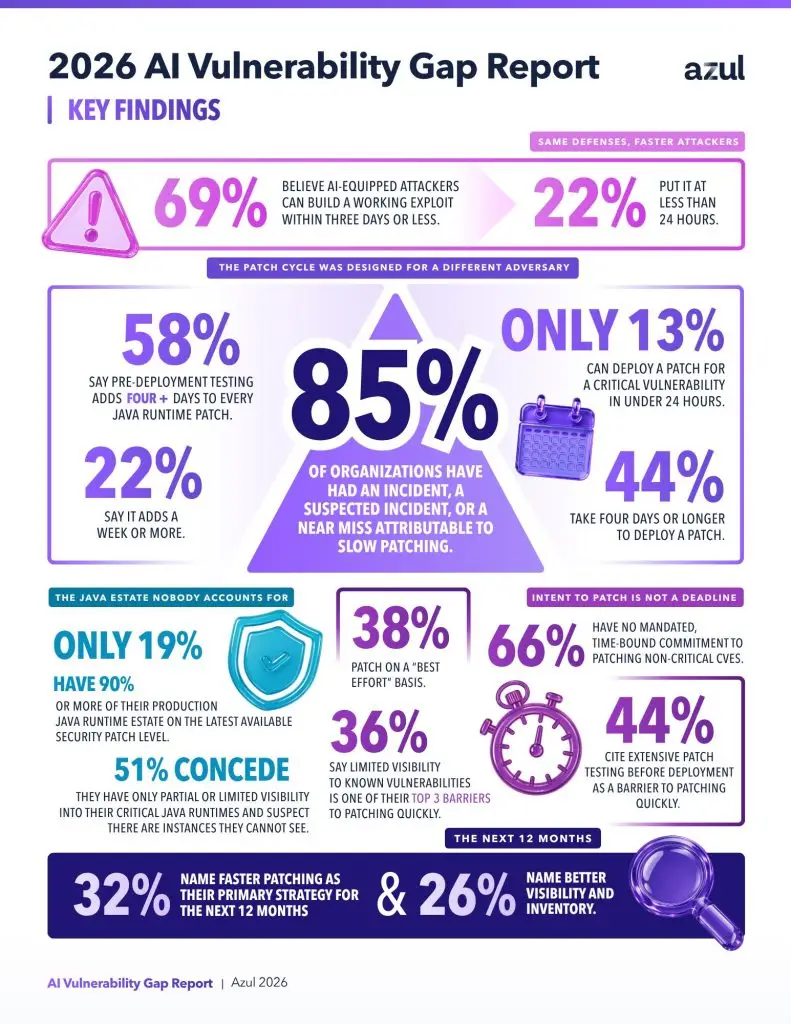
A separate Azul survey points to a race between expected exploit speed and patch deployment. Sixty-nine percent of respondents expect attackers using AI to exploit a new vulnerability within three days or less; 56% said they can deploy a critical patch within three days. Eighty-five percent reported an incident, suspected incident or near miss tied to slow patching. For teams responsible for Java estates, the gap makes patch readiness and deployment processes a practical issue to review.
In its 2027 State of IT Infrastructure Resilience study, 11:11 Systems reported that 90% of respondents saw data centre infrastructure costs rise over the past 12 months, with an average year-over-year increase of 13%. Cyberattacks were the top data centre concern for 43%, while 73% expected data protection, backup and recovery budgets to increase in 2027. Sixty-nine percent had experienced at least one cyberattack in the prior 12 months, and 24% had experienced three or more. In addition, 62% said the average cost of one hour of downtime exceeds $250,000. These are survey findings, but they underline why resilience planning now has to account for both rising costs and service interruption.
Channel programs, connectivity and new security services
Coro introduced two partner programs: one to certify partners to deliver Coro services, and another intended to help identify U.S. public-sector opportunities. Global vice president of marketing, programs and enablement Heather Harlos said the services program includes hands-on training and deployment experience, while the opportunity program is intended to reduce the time partners spend searching for prospects.
T-Mobile Business added connectivity qualification and pricing to CableFinder marketplaces used by technology services distributors. The integration includes T-Mobile Business Internet and SuperBroadband, giving technology advisers a way to check connectivity options through marketplaces they already use.
Cowbell said its standalone AI liability coverage for U.S. small and midsize businesses is scheduled to become available Jan. 1, 2027. The non-admitted policy is intended to address losses and claims associated with AI use, including situations involving autonomous agents. That date is the stated availability target; brokers and businesses should track the insurer’s updates for product details.
ESET launched Threat Intelligence Investigation Lab, a toolset combining indicator-of-compromise searches with sample submission. ESET says it is aimed at security operations teams, response organizations and managed security providers seeking to validate suspicious files and indicators during incident triage. Its stated purpose is to add behavioral context to ESET telemetry so analysts can decide whether to block, investigate, escalate or close an alert.
Barracuda advises customers to refresh XDR integration credentials
Barracuda said a cloud access key stored in a configuration file in a third party’s GitHub repository provided initial access after that party’s development environment was compromised. The attacker accessed a system between Nov. 1 and Nov. 2 that stores credentials Barracuda XDR uses to collect data from connected services, including Microsoft 365, Google Workspace and endpoint security platforms.
Barracuda said it found no direct evidence that customer integration credentials were viewed or accessed. It notified potentially affected customers and advised them to revoke and recreate those credentials. The company also said the attacker searched for reusable credentials and cryptocurrency assets, then used compromised credentials to move laterally within parts of the environment. Customers who received a notification should follow Barracuda’s credential guidance and review their connected integrations.
Across this week’s developments, administrators have several concrete checks to prioritize: monitor Microsoft 365 service health, apply N-central 2026.4 HF2 and update Agents and Probes, review ScreenConnect deployments, and rotate XDR integration credentials when advised. The research also gives IT leaders a reason to revisit patch timing, recovery plans and the cost assumptions behind resilience budgets.


