- Subject
- Windows & PowerShell
- Filed
- Source
- Colin Ryan
- Loans
- 705
Amazon’s $11.5bn Globalstar Deal Clears FCC, Setting Up Direct-to-Device Service
The FCC cleared Amazon’s $11.5bn Globalstar deal, giving Leo satellite assets and a path toward direct-to-device connectivity targeted for 2028.

Amazon has cleared a major regulatory step in its effort to build a satellite communications business: the FCC approved its $11.5bn acquisition of Globalstar. The deal gives Amazon access to Globalstar’s existing satellite operations, infrastructure and licences, which it plans to integrate into its Leo service.
For connectivity teams, the approval matters because it brings Amazon closer to adding direct-to-device (D2D) service to a low Earth orbit network that is still being built. Amazon says it plans to deploy its own D2D satellite systems by 2028. That target makes the next phase of the deal worth watching, though the approval itself does not mean the service is available now.

What the approval covers
The FCC issued its decision on 27 October 2026. It found the transaction likely to benefit the public through better data coverage in unserved or underserved areas, stronger emergency communications, growth in industrial and enterprise data services, and more intensive use of mobile-satellite spectrum. The agency also said it found no material public-interest harms likely to result from the acquisition.

FCC chair Brendan Carr described the authorisation as a “significant step towards supercharging next-generation connectivity”. He said the deal would enable Amazon Leo to offer satellite broadband, increase competition and help communities stay connected across the country. Those are the FCC chair’s stated expectations; the practical reach and performance of any future service will depend on deployment and service details not provided with the approval.
Amazon first announced the transaction in April. The acquisition combines assets that already exist at Globalstar with Amazon’s developing satellite network. That distinction matters operationally: integrating an established satellite operation could expand the capabilities available to Leo, while Amazon’s own constellation still needs to grow before its planned service can reach its intended scale.

Amazon’s constellation is still building
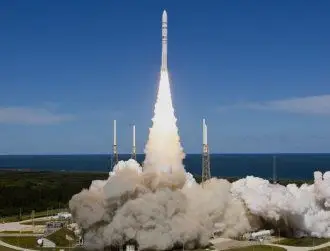
Amazon says it has deployed nearly 400 satellites and built more than 1,000 for its initial constellation. Its longer-term aim is to have more than 3,000 satellites in space. The figures describe different stages of the programme: satellites built are not necessarily satellites already operating in orbit.

Starlink, the satellite connectivity business operated by SpaceX, has more than 10,000 active satellites in orbit, according to recent satellite tracking reports. That comparison shows the scale of the gap Amazon is seeking to close, but satellite counts alone don’t establish equivalent capacity, coverage or service quality. Teams assessing satellite connectivity will still need information about availability, supported devices, coverage areas, performance and service terms as those details emerge.

Globalstar’s assets could help Amazon add D2D capability and extend cellular coverage through its low Earth orbit network. For organisations with sites beyond dependable terrestrial coverage, direct connections between devices and satellites could eventually provide another option for communications. The source details no supported device models, carrier arrangements, geographic rollout sequence or technical service specifications, so those remain open questions for IT planners.

What IT teams should watch next
The 2028 target is the clearest timing detail for Amazon’s own D2D satellite systems. Before that service can inform connectivity plans, administrators will need to see what Amazon and its partners specify about compatible hardware, coverage, service availability and how satellite links fit with existing mobile services. The approval does not provide those implementation details.
For enterprise and industrial users, the FCC’s decision highlights potential use in data services and communications coverage, but it doesn’t establish a product offering or guarantee that a particular location will be served. Organisations considering remote-site connectivity should treat Leo as a developing option and continue to evaluate it against their current coverage and resilience requirements when Amazon publishes concrete service information.
The competitive context is also developing beyond the United States. On 19 October, Deutsche Telekom, Orange, Telefónica and Vodafone said they were exploring a joint bid to provide satellite mobile services in Europe. Their stated aim was “responsible European governance of key space infrastructure”. That initiative points to continued activity among telecom operators, while Amazon’s FCC approval advances its own effort to combine satellite assets and build out Leo.
For now, the practical milestone is permission for Amazon to acquire Globalstar’s satellite operations, infrastructure and licences. The next measures to track are integration progress, Amazon’s ongoing constellation deployment and the promised 2028 D2D systems. Those details will show when the transaction begins to translate into service options that network and infrastructure teams can assess.