- Subject
- Microsoft 365 & SharePoint
- Filed
- Source
- Ann O’Dea
- Loans
- 542
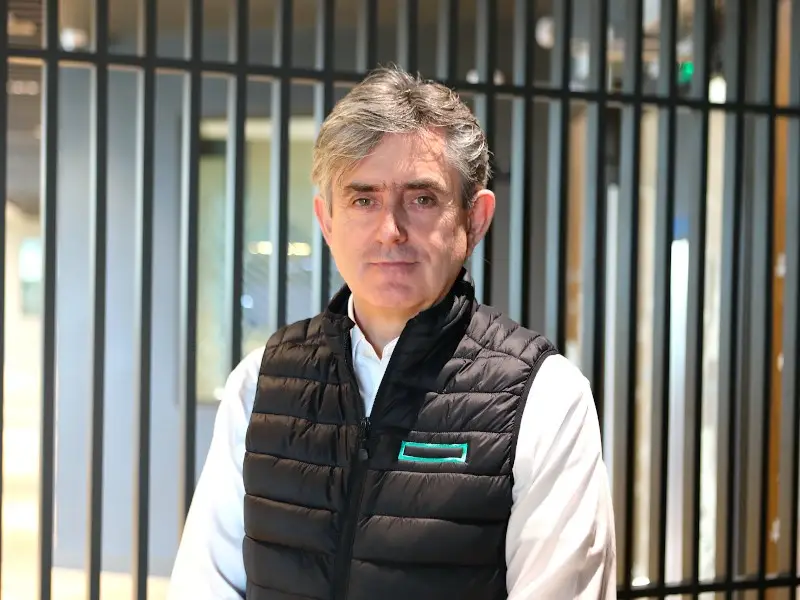
MongoDB’s Donal Walsh: AI’s Advantage Will Depend on Its Data Foundation
MongoDB’s Donal Walsh says data foundations, flexible storage and recovery options will shape AI deployments as the company expands its Irish engineering teams.



For companies building AI systems, the choice of model may not be the lasting source of advantage. Donal Walsh, MongoDB’s vice-president of product and technology for Europe, the Middle East and Africa, argues that the data platform beneath those models is likely to matter more. That view puts familiar infrastructure concerns—data quality, availability, storage flexibility and recovery—at the centre of AI planning.

Walsh made the case in the first episode of the fifth season of The Leaders’ Room. He also discussed MongoDB’s engineering work in Ireland, the company’s expansion plans and the lessons he has drawn from scaling distributed systems and teams.

Why the data layer matters to AI
Walsh expects competing AI models to become more alike over time, describing the direction as “a level of commoditisation”. If that happens, he believes organisations will find more distinction in the data foundations on which their AI applications run. The practical question for IT teams, then, is not only which model to use, but whether their data platform can support the applications built around it.

MongoDB’s database uses a document model, which Walsh describes as a flexible way to store information. He sees that structure as a fit for AI agents that gather information and create the data they need to retain while performing tasks. His claim is that a platform designed to accommodate changing data can suit those workloads; the operational value will depend on how well it fits each organisation’s data and application requirements.

That flexibility sits alongside the more established demands of mission-critical systems. Walsh describes MongoDB as a data platform for workloads where information must remain secure, durable and highly available, with responses often required within milliseconds. Those requirements don’t disappear when an application adds AI. They still shape architecture, service expectations and recovery planning.

Cloud choice and recovery planning
Walsh says customers want greater control over where their data is stored. He also points to closer attention to disaster recovery scenarios amid geopolitical tension. MongoDB can run across major cloud providers or on-premises, he says, allowing customers to keep a copy of their data platform on another cloud and switch over if needed.
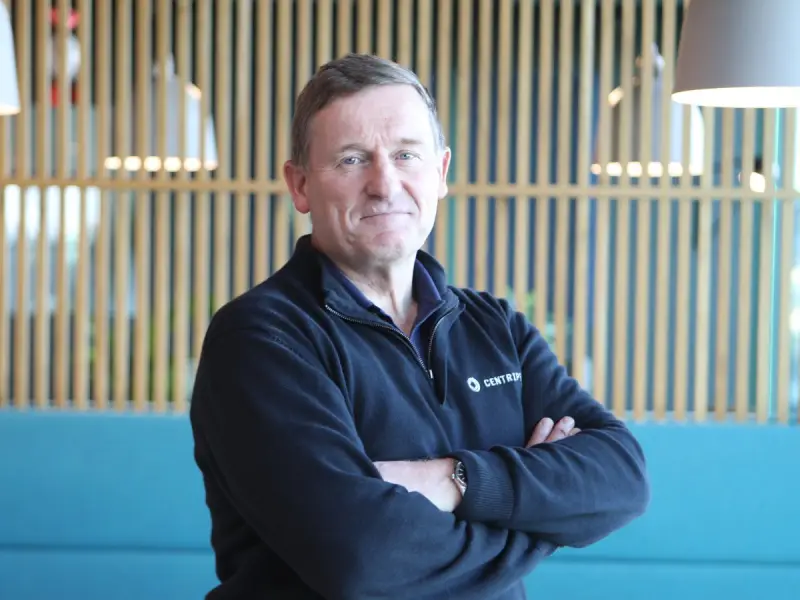
That option gives infrastructure teams a potential route to reduce dependence on one hosting environment. It also makes the details of a recovery design matter: where copies are kept, how the platform is operated across environments, and whether a switch can support the workload when required. Walsh describes the capability, but gives no recovery-time figures or technical configuration details.

Dublin’s role in MongoDB’s engineering
MongoDB was founded in New York in 2009, beginning with an open-source database. The company now has more than 5,000 employees and 70,000 customers worldwide, and Walsh reports year-on-year growth of 29 per cent. Those figures frame a business whose platform is used for workloads where uptime and response speed matter.

Ireland has been part of that operation since MongoDB established its international headquarters there in 2013. It has offices in Ballsbridge, Dublin, and opened another base in Cork this year. Walsh points to a €74m multi-year investment announced this year, with plans to increase Irish headcount from around 300 going into the end of 2025 to closer to 600 by the end of this year. Engineering is expected to grow from about 50 people to closer to 200.

The Irish operation already owns significant engineering work, Walsh says. Teams in Dublin contribute a material portion of MongoDB’s core query engine, its observability stack and much of the control plane for Atlas, the company’s cloud product. He says that responsibility was a condition he set before accepting the leadership role late last year. For customers, the point is that the Irish offices are involved in building core parts of the platform, rather than serving only as a sales or support presence.

A career built around scaling systems
Walsh trained as an electronic engineer at Dublin City University. He spent 11 years at travel software provider Datalex, including one year in the United States and five in Southeast Asia, before moving to Citibank to run its global liquidity engine.

He later helped Mobile Travel Technologies grow from about 40 employees to roughly 250. After that, he joined Amazon DynamoDB to help expand its Irish operation. The pattern across those roles, he says, has been taking complex systems or organisations and helping them scale. “That’s kind of my thing from a career perspective,” he said.

His view on leadership has also shifted with experience: culture matters more to him the longer he has worked in the industry, and he regards getting it right as central to success. For technology leaders weighing AI investments, his broader message is a useful prompt: look beyond the model, and assess the data platform, operating choices and teams that will have to support the resulting systems.